
Space rocks and impact craters
In this lesson, pupils discover what types of stones and rocks float around in space. We explain the difference between asteroids, meteoroids, meteors, meteorites and comets. These are similar, but slightly different.
The lesson ends with a brief explanation of how impact craters are formed and a fun experiment in which pupils make their own craters on a simulated planet or moon surface. They use various objects to create the impact craters.
Observing, Comparing, Drawing Conclusions
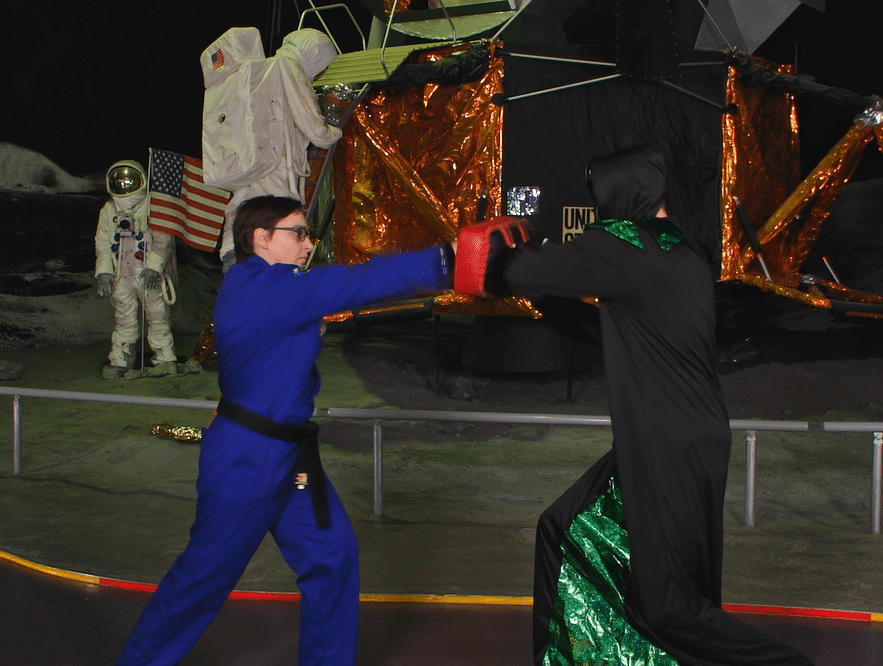
Your mission: Learn the basics of martial arts (karate) to defend yourself against simple attacks and, in case of emergency, …

Your Mission: Sample, grow, and investigate the micro-organisms around us and research their relationship with many of the products we …

Your Mission: Measure different body parts and explore how these measurements might change in space. How tall are you? Are …
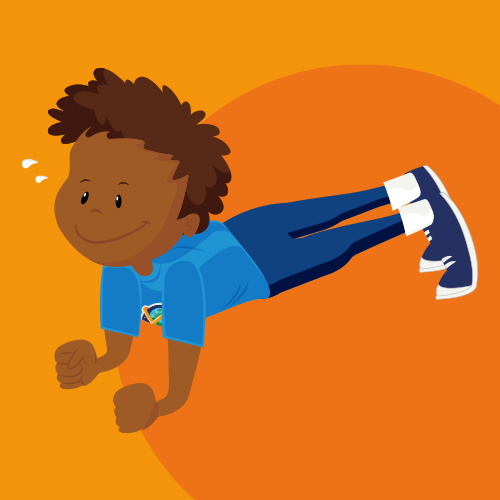
Your Mission: Perform the Commander Crunch and Pilot Plank to improve the strength in abdominal and back muscles. Astronauts in …
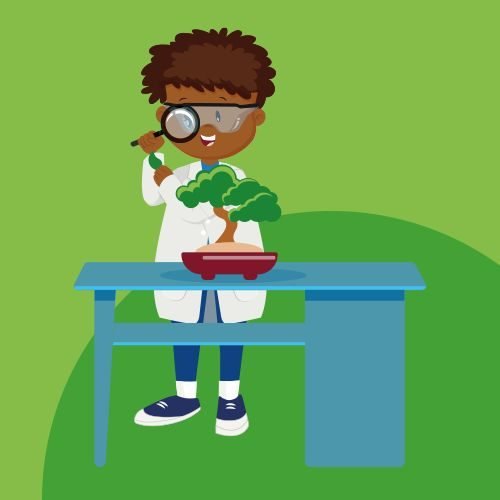
Your Mission: Follow the development of three plants for 12 weeks to explore germination and plant growth. If astronauts are …
Did you know that jumping might be a key activity in keeping astronauts healthy in space? Try some jump rope …
Your Mission: Complete an agility course as quickly and as accurately as possible to improve agility, coordination and speed. When …
Your Mission: Observe and compare bones, and design bone models to investigate ways to keep bones healthy. Explorers need strong …
Your Mission: Perform a reaction time activity using a ruler to practice hand-eye coordination and concentration. In preparation for space …
Time for a brain (and body) twisting game! Using your flexibility and agility, we want to see you navigate your …