
Water in space
In this lesson, we will search for water in the universe. Water is important because without it, life as we know it would not be possible. We have plenty of liquid water on Earth, but the question is whether this is also the case elsewhere in our solar system.
Observing, Predict, Logical Reasoning

Your Mission: Perform a series of somersaults on the ground to improve body coordination, flexibility, balance and strengthen your back, …
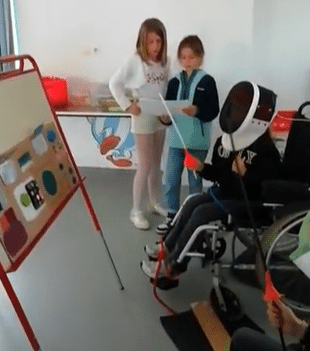
Votre mission: Résistez à la gravité pour marquer le plus de points possible. This resource was created by CNES, ESERO …
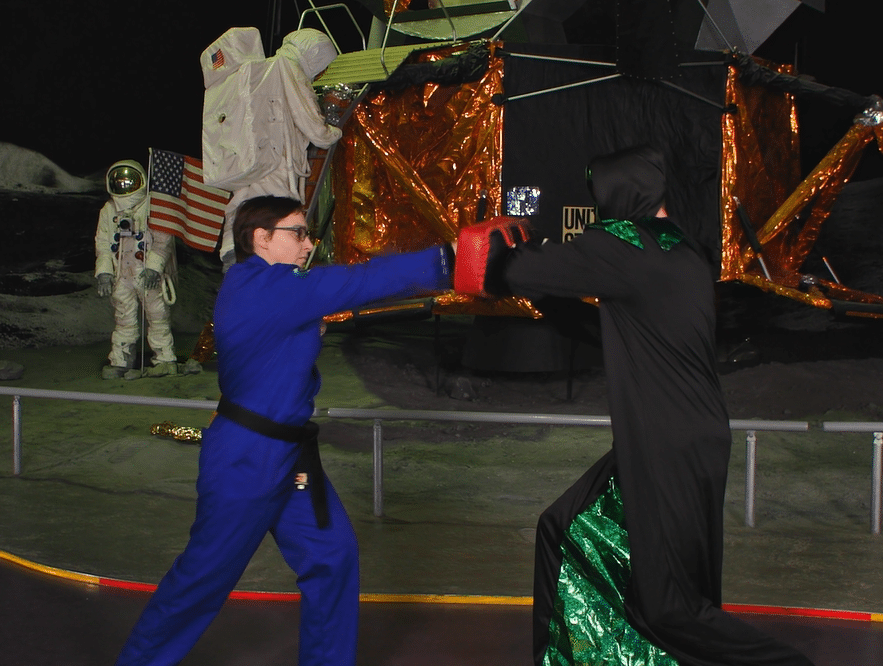
Your mission: Learn the basics of martial arts (karate) to defend yourself against simple attacks and, in case of emergency, …

Your Mission: Investigate healthy food choices and Calorie needs for life on earth vs. life in space Astronauts living on …

Your Mission: Explore the anatomy of the hand and build a bionic hand from cardboard. In a near future, it …

Your Mission: Explore taste sensations on the tongue and experiment to see which senses influence taste. For astronauts, all their …
In microgravity, astronauts love to perform spectacular somersaults. Here on Earth it’s not so easy, but it certainly is fun! …

Your Mission: Perform body-weight squats and push-ups to develop upper and lower body strength in muscles and bones. Astronauts must …

Your Mission: Explore the importance of hydration and identify the signs of dehydration. Since our bodies are made up of …

Your Mission: Design and build a robotic arm to perform some simple tasks. To help out in space, scientists have …