
Water in space
In this lesson, we will search for water in the universe. Water is important because without it, life as we know it would not be possible. We have plenty of liquid water on Earth, but the question is whether this is also the case elsewhere in our solar system.
Observing, Predict, Logical Reasoning

Your Mission: Observe and compare bones, and design bone models to investigate ways to keep bones healthy. Explorers need strong …
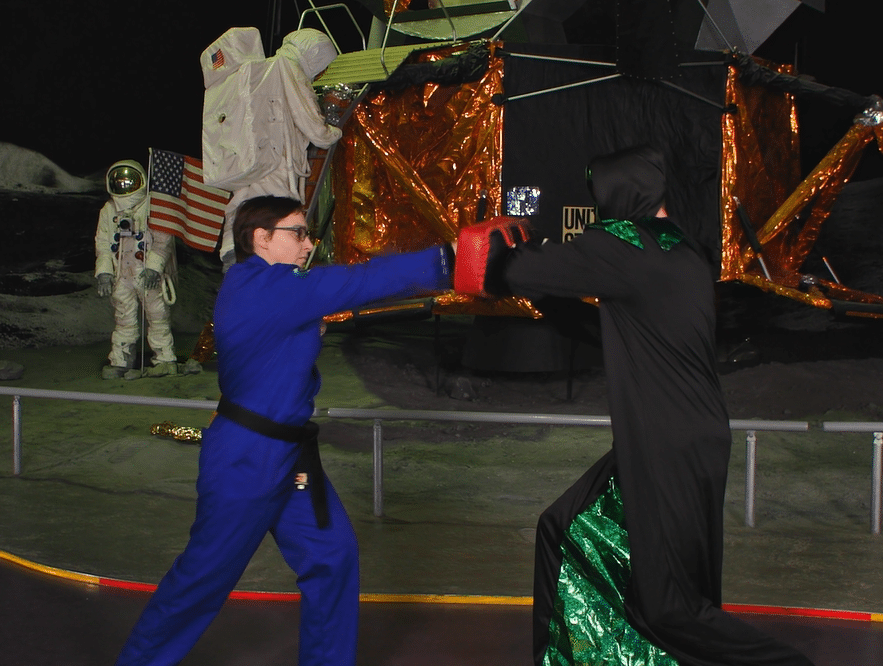
Your mission: Learn the basics of martial arts (karate) to defend yourself against simple attacks and, in case of emergency, …

Your Mission: Investigate healthy food choices and Calorie needs for life on earth vs. life in space Astronauts living on …

Your Mission: Sample, grow, and investigate the micro-organisms around us and research their relationship with many of the products we …
Your MissionAccumulate a total of 42 km (26.2 mi) as a team, an individual or as a family… it is …

Your Mission: Train with a cycle to improve leg muscles, cardio-vascular fitness and endurance. One exercise device that is regularly …
Your Mission Playing sports requires teamwork and preparation. Teammates must work together. In space, astronauts also must react to new …

Your Mission: Measure different body parts and explore how these measurements might change in space. How tall are you? Are …

Your Mission: Perform body-weight squats and push-ups to develop upper and lower body strength in muscles and bones. Astronauts must …

Your Mission: Design and build a robotic arm to perform some simple tasks. To help out in space, scientists have …