
Water in space
In this lesson, we will search for water in the universe. Water is important because without it, life as we know it would not be possible. We have plenty of liquid water on Earth, but the question is whether this is also the case elsewhere in our solar system.
Observing, Predict, Logical Reasoning

Your Mission: Perform an exercise with balls of different weights, as if you were in different gravitational conditions, to strengthen …

Your Mission: Follow the development of three plants for 12 weeks to explore germination and plant growth. If astronauts are …
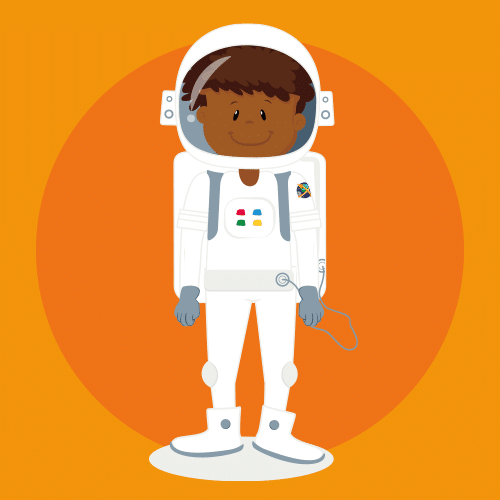
In microgravity, astronauts love to perform spectacular somersaults. Here on Earth it’s not so easy, but it certainly is fun! …

Your Mission: Carry weighted objects from the Exploration Area back to your Base Station to improve aerobic and anaerobic fitness. …
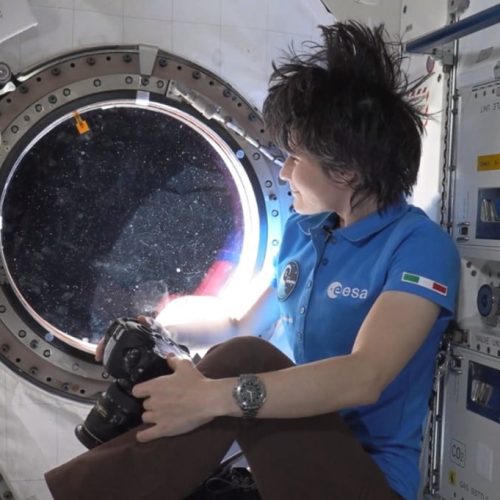
Your Mission: Follow Samantha’s routine on the ISS for one week and compare her daily tasks to yours. Observe your …

Your Mission: Perform an activity that blends together squats, pushups, and jumping in the air (burpees) to promote muscular strength, …

Your Mission: Perform the Commander Crunch and Pilot Plank to improve the strength in abdominal and back muscles. Astronauts in …
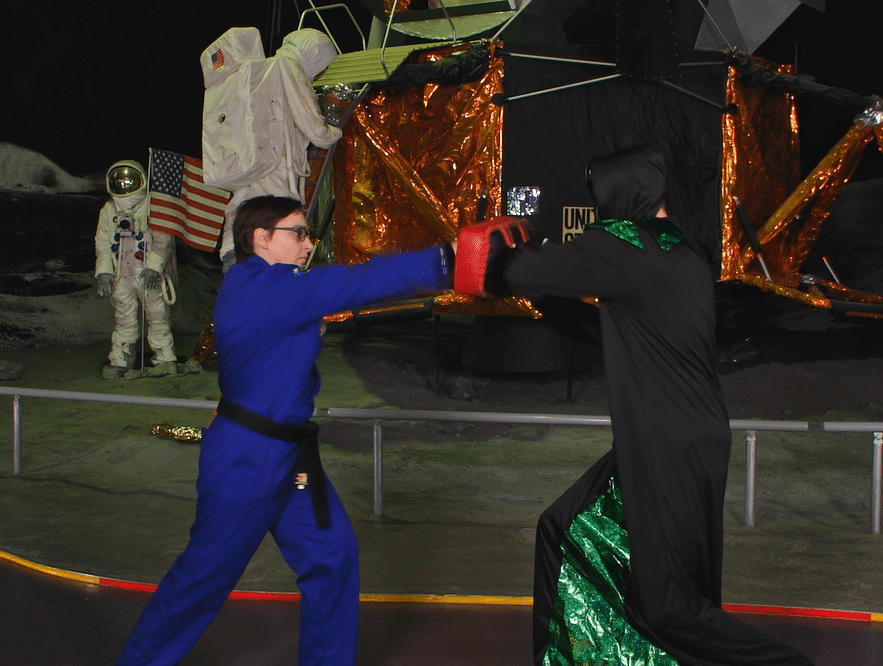
Your mission: Learn the basics of martial arts (karate) to defend yourself against simple attacks and, in case of emergency, …
Your Mission Playing sports requires teamwork and preparation. Teammates must work together. In space, astronauts also must react to new …
You have just had a great day of exploring the Moon, but it’s time to head back to the base …